VAT vs Sales Tax: Key Differences Explained
Quick answer: VAT is charged at every stage of the supply chain, and each business reclaims the VAT it paid, so the tax lands on the final consumer. Sales tax is charged once, only on the final retail sale. Most of the world uses VAT. The United States uses sales tax.
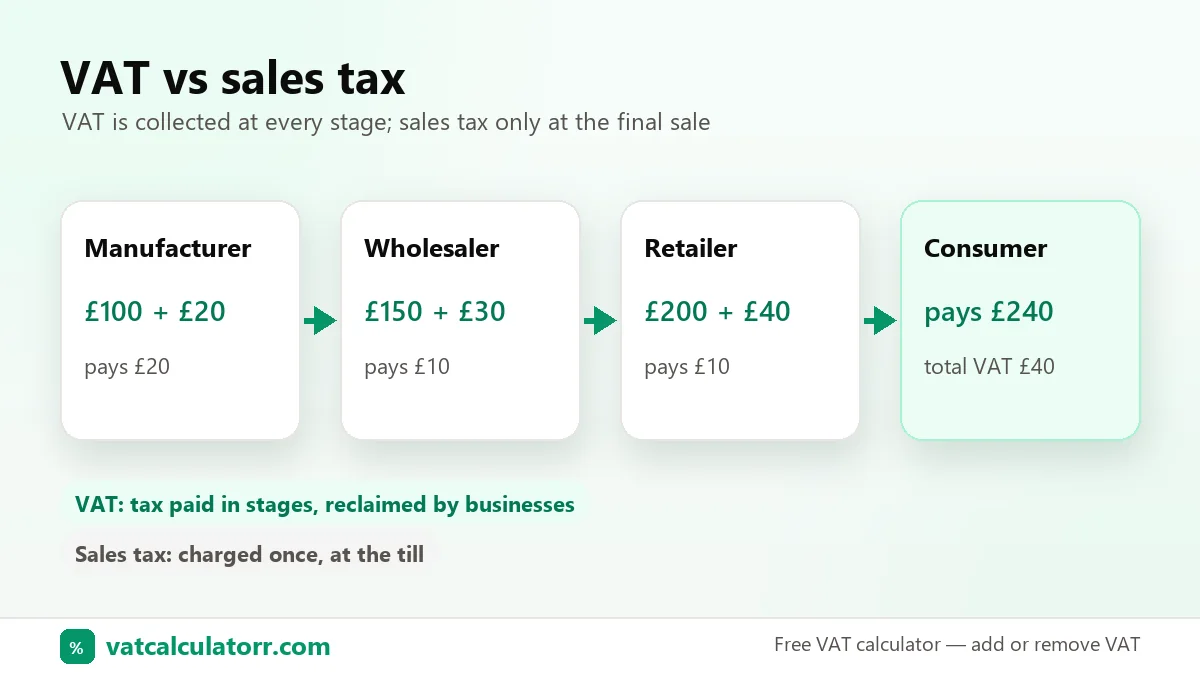
How VAT flows through the chain
A manufacturer sells to a wholesaler for £100 + £20 VAT. The wholesaler sells to a retailer for £150 + £30 VAT and pays HMRC only the difference, £10. The retailer sells to you for £200 + £40 VAT and pays £10 more. In total the tax authority collects £40, the VAT on the final price. Each business only pays tax on the value it added.
Key differences
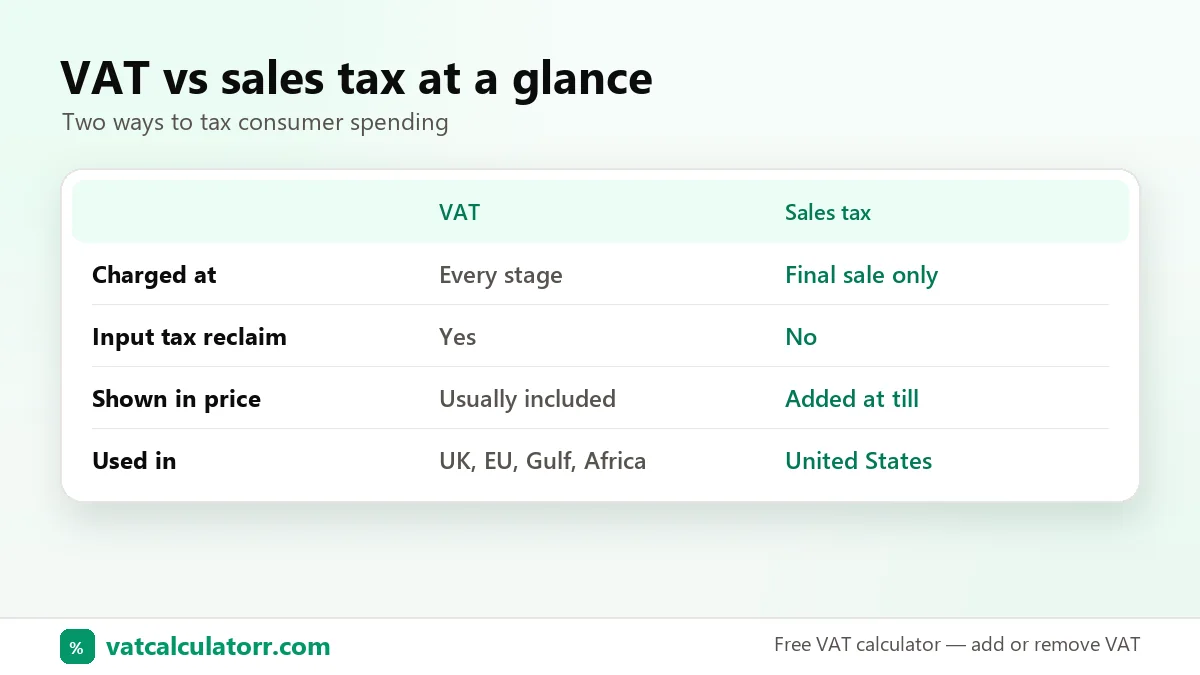
| VAT | Sales tax | |
|---|---|---|
| Collected | At each stage | Final sale only |
| Input tax reclaim | Yes | No (resale exemption) |
| Typical rates | 5–27% | 0–10% (US state + local) |
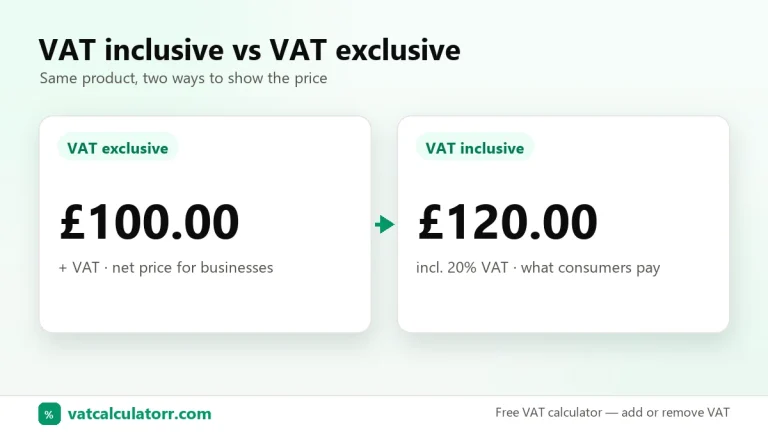
| Shown on price tags | Usually included | Added at the till |
Why governments prefer VAT
Because tax is collected in stages, there’s less risk of losing it all at one point. The invoice trail also makes VAT easier to audit.
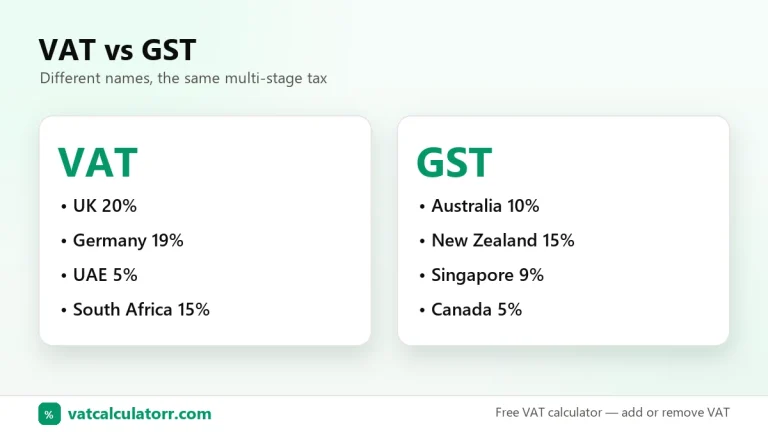
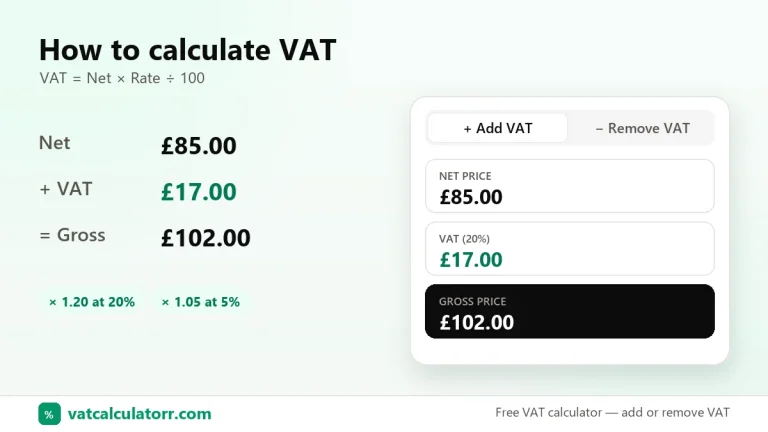
Related: VAT vs GST, how to calculate VAT and VAT rates by country.
Sources: Sources: the European Commission’s how VAT works and HMRC’s How VAT works guide.